Your sofa sees more daily use than almost any other piece of furniture in your home. It's where you start your morning, end your day, and host everyone in between. So when it starts to wear down, it affects more than just how your living room looks. Here's how to know when it's time to let go and start fresh.
1️⃣ Choose a sofa with visible legs
A sofa that sits flush to the floor can make a room feel heavier and more closed in. Choosing a piece with visible legs creates a sense of openness underneath, letting light and sightlines flow through the room. It's a small detail that makes a noticeable difference in how airy a space feels.
2️⃣ Go modular instead of oversized
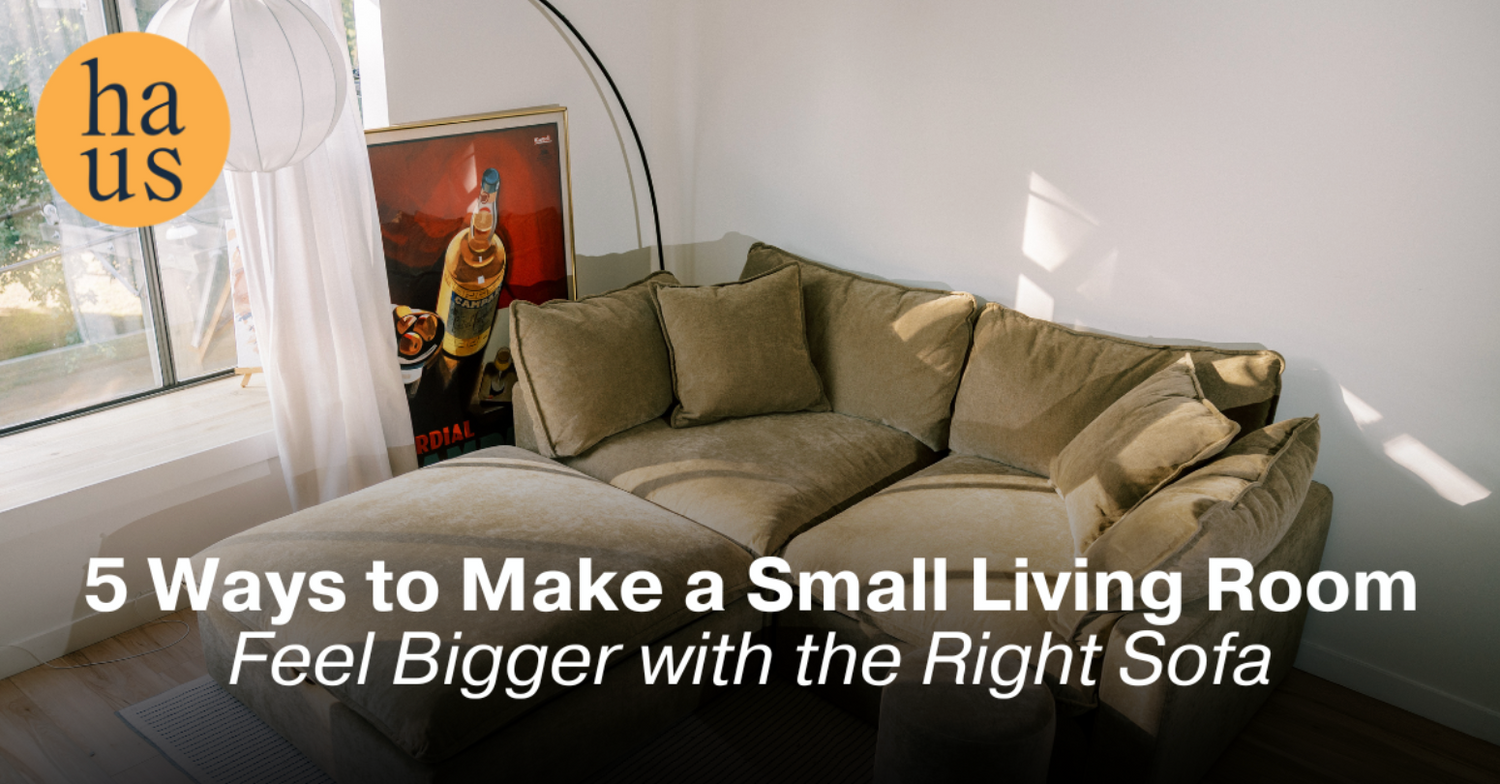
A single bulky sofa can dominate a small room, but a modular sofa gives you flexibility without the bulk. You can configure it to fit your exact layout, whether that means a smaller two seater now with the option to add modules later as your space or needs change.
3️⃣ Sticks to a lighter colour palette
Darker, heavier fabrics can visually shrink a room, while lighter tones help a space feel brighter and more open. Light neutrals also make it easier to play with texture and pattern through pillows and throws without overwhelming the room. Our fabric and materials guide is a good starting point if you're deciding between options, and you can order free fabric swatches to see how a colour actually looks in your space before committing.
4️⃣ Pick a sofa that fits the room
It's tempting to choose the longest sofa that fits against one wall, but proportion matters more than length. A sofa that's slightly smaller, with room to walk around it, often makes a space feel more comfortable than one that's pushed to its limits. Measuring your space properly before you buy makes this much easier to get right.
5️⃣ Let one piece do double duty
In a small living room, every piece of furniture should earn its place. A sofa with a chaise, built in storage, or a configuration that doubles as extra seating for guests means you don't need as many additional pieces cluttering the room. This is where a modular configuration really pays off, since you can adapt it as your needs change without buying something new.
The bottom line
Making a small living room feel bigger isn't about buying less furniture, it's about choosing the right piece. A sofa that's proportioned well, configured smartly, and finished in the right tone can completely change how a small space feels to live in. If you're not sure what configuration works best for your room, booking a design consultation is a simple way to figure it out before you commit.